
Regional development scenarios for urban water management
Maris presents a 5-Point Plan for the Sponge City
07.05.2026
IFAT 2026: Working together to push the Sponge City
Being at IFAT 2026 AKUT holds discussions and is networking with various stakeholders in the water management sector.
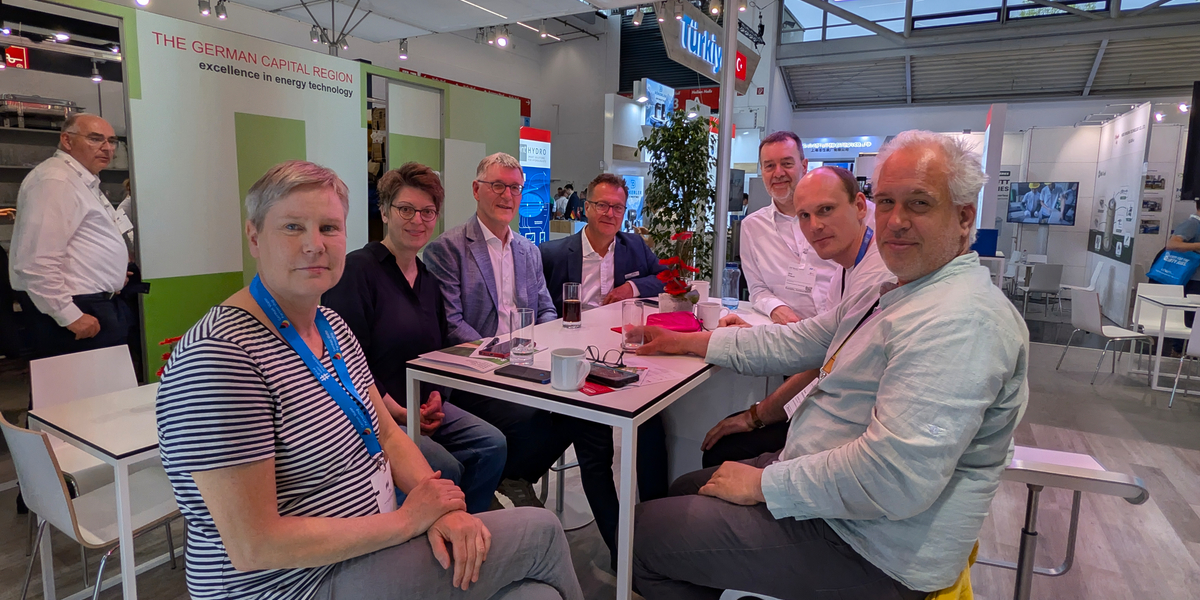
In this context, our ‘rainwater expert’, Anne Wehrmann, also took part – in her capacity as deputy chair of the Maris Network of the Berlin-Brandenburg Water Industry – in a joint round-table discussion with the fbr – Bundesverband für Betriebs- und Regenwasser e. V. (Federal Association for Process and Rainwater) on a joint approach to implementing sponge city principles. In addition to the board members, the managing directors of both organisations were also present.
IFAT 2026: Working together to push the Sponge City
Kampala - Water Resources Management Programme
02.04.2026
Maris presents a 5-Point Plan for the Sponge City
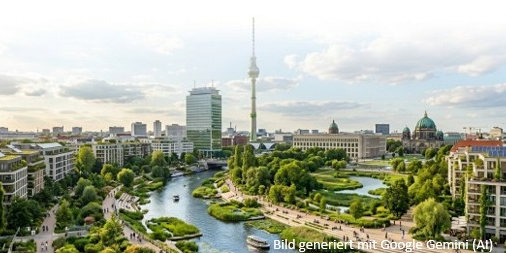
As members of the Maris water management network in Berlin-Brandenburg, we have helped to draw up the ‘5-point plan for Berlin as a sponge city’. We firmly believe that effective solutions must be found quickly in order to tackle the challenges posed by climate change. Bold and sustainable changes are needed in this city in terms of administration, funding, regulation, technology and training.

Maris presents a 5-Point Plan for the Sponge City
Research for decentralised water reuse
01.11.2024
Kampala - Water Resources Management Programme
New Work Stage Launched for the HPI Kampala in Uganda
As part of the “Lake Victoria Basin – Integrated Water Resource Management Programme,” AKUT and its joint venture partners have launched a new work stage of the High Priority Investment (HPI) project in Kampala, Uganda. Implemented by KfW with funding from BMZ and the EU, this project seeks to reduce pollution into Lake Victoria. The HPI project in Kampala is one of four similar investments underway across Uganda, Kenya, Rwanda, and Tanzania, all aimed at improving wastewater management and protecting regional water quality.
Following the successful completion of a feasibility study in 2023, the design phase for Kampala’s project began with a Kick-off Meeting on October 23rd. During this phase, consultants will develop plans for pumping stations, pressure pipes, and sewer networks to transfer wastewater from parts of the South of Luzira Subcatchment Area (SOLCA) to the Nakivubo Wastewater Treatment Plant (WWTP). This plan is aligned with the updated 2022 Kampala Sanitation Report which identifies key investment areas to expand Kampala’s sewer network. AKUT’s approach prioritizes robust, low-maintenance, and energy-efficient infrastructure.
Currently, untreated sewage from the SOLCA area is discharged into aging treatment ponds that no longer function effectively, allowing contaminated water to flow directly into Inner Murchison Bay in Lake Victoria. The planned upgrades will route this wastewater to the Nakivubo WWTP, where treatment is expected to remove approximately 1.8 tons of Biochemical Oxygen Demand (BOD5)—a key measure of organic pollution that depletes oxygen in water—each day. This reduction will contribute to protect Lake Victoria’s ecosystem and improve health outcomes for the local community.
In partnership with the National Water and Sewerage Corporation (NWSC) and the Ministry of Water and Environment (MWE), AKUT and project stakeholders aim to complete the wastewater connection for SOLCA by 2027. This significant milestone will mark a major step forward in safeguarding Lake Victoria and ensuring sustainable water quality for the region.
Kampala - Water Resources Management Programme
CABUWAZI climate exhibition
10.11.2022
Research for decentralised water reuse
In our latest research project, DeWaResT [1], we are focusing entirely on Nature Based Solutions (NBS) to make used water from households reusable. It has long been a nuisance that high-quality drinking water is first used for flushing toilets and then has to be pumped to the sewage treatment plant, sometimes via long pipes. Afterwards, it is no longer available to the local water balance and leads, more or less well purified, to an unavoidable and, with decreasing runoff, increasing chemical pollution of the water bodies. It is already clear that rising temperatures are causing a sharp increase in water consumption in the landscape. At the same time, there is less precipitation in some regions of Brandenburg. As a result, groundwater levels are sinking and lakes and watercourses are drying out.
According to the European Directive 91/271/EEC and the Brandenburg Municipal Wastewater Ordinance (§7 BbgKAbwV), water abstraction from natural sources should therefore be reduced and treated wastewater reused wherever possible. However, high demands are placed on the reuse of treated wastewater in agriculture to protect the environment and products. It is estimated that the wastewater collected in decentralised collection pits in Brandenburg could cover up to 20% of the irrigation needs in agriculture if it were appropriately treated in a decentralised manner. In the future, the European Water Reuse Regulation (EU-WVVO) will regulate the requirements for purification and monitoring.
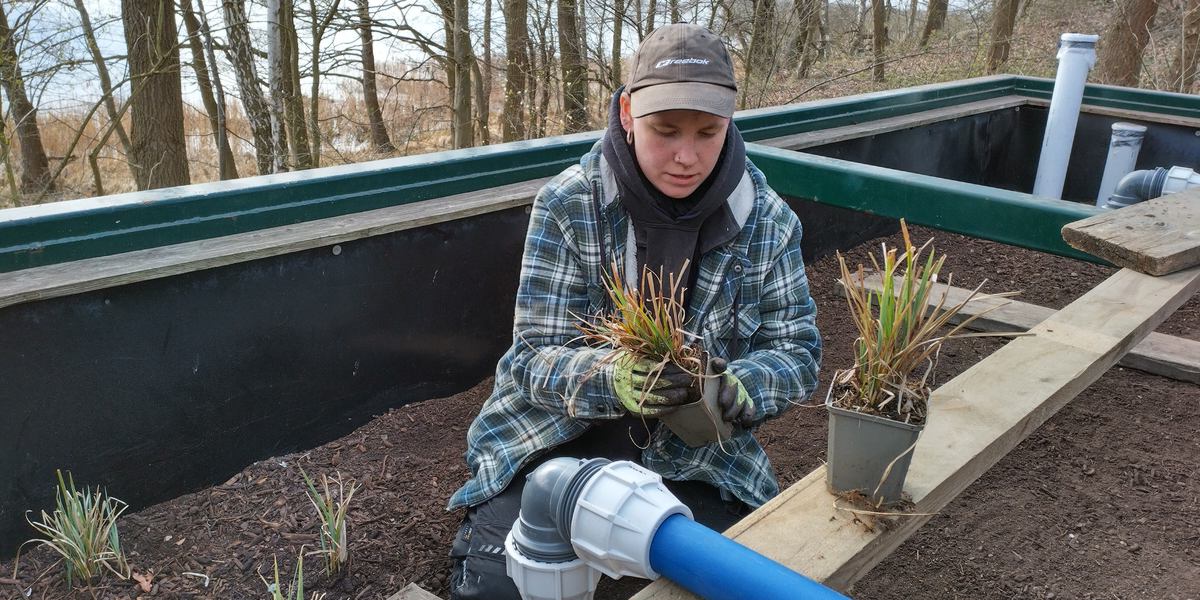
The contribution of our research project is to enable such decentralised water cycles. For this purpose, constructed wetlands are optimised in terms of process technology and combined with further purification stages as required. Such vegetated soil filters are particularly suitable for decentralised application due to their simple and robust operation. Integrated stages are designed to further remove germs and trace substances.
The innovative soil filter is compact and requires a very small surface area. Two pilot plants in Brandenburg are used for optimisation and further development. The Pehlitzwerder plant serves to prove its applicability at a remote natural camping site with very high nature conservation requirements in the middle of the Schorfheide-Chorin biosphere reserve. The second plant treats regular household wastewater. After completion of the investigations in 2023 and evaluation of the results, this new type of constructed wetland should be available for future decentralised applications. This is intended to close the gap in agricultural (economic) water reuse. This research is funded by the Federal Ministry of Education and Research (BMBF) in the funding measure “KMU-innovativ”, technology field “Resource Efficiency and Climate Protection”, application area “Sustainable Water Management”. The project partner is KWB Kompetenzzentrum Wasser gGmbH, Berlin.
Further information: Heribert Rustige
[1] Decentralised wastewater treatment and water reuse for regions with seasonal drought stress